











THE CHANGING TIDE : MODI-SHAH LEADERSHIP POST-2024




The 2024 Lok Sabha elections marked a significant milestone in Indian politics. Prime Minister Narendra Modi secured a historic third consecutive term, a feat last achieved by Jawaharlal Nehru. However, the Bharatiya Janata Party falling short of the majority mark on its own has led to widespread discussions. While they successfully formed the government with the help of National Democratic Alliance partners, many political analysts suggest that the aura of invincibility surrounding the Narendra Modi and Amit Shah duo has dimmed.
To understand why there is a perceived shift in public respect and enthusiasm, one must look at a combination of economic realities, social narratives, and growing debates over governance and institutional integrity.
Debates Over Institutional Autonomy
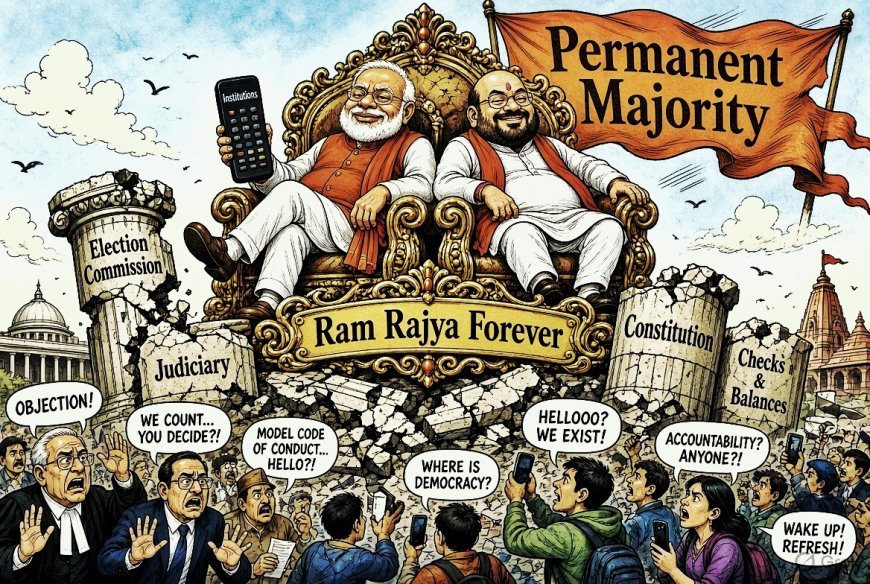
A major theme that the opposition and civil society have consistently highlighted is the alleged erosion of institutional independence. Critics have expressed deep concerns over the perceived centralisation of power, arguing that it has impacted the autonomy of statutory and constitutional bodies.
For instance, the passing of legislation that replaced the Chief Justice of India with a Union Cabinet minister on the selection panel for Election Commissioners sparked significant backlash. Opposition parties argued that this move compromised the neutrality of the Election Commission. Similarly, debates have frequently arisen regarding the independence of the judiciary, with critics alleging that the executive exerts undue pressure on judicial processes and appointments, a claim the government strongly denies.
Controversies, Optics, and Political Rhetoric
Public perception has also been shaped by several persistent controversies. Opposition leaders have repeatedly raised questions demanding transparency regarding the Prime Minister’s educational qualifications, turning it into a long-standing political row.
Furthermore, allegations of nepotism and political influence in non-political spheres have drawn public scrutiny. The rapid elevation of Amit Shah’s son, Jay Shah, to the position of BCCI Secretary and subsequently as the Chair of the International Cricket Council (ICC) has been heavily criticised by the opposition, who point to his lack of a professional cricketing background as evidence of dynastic privilege- an accusation the BJP often levels against its rivals.
Additionally, while the government’s foreign policy is often showcased as a major success, critics argue that international summits and diplomatic engagements are sometimes heavily PR-driven. Detractors claim these events are curated as grand spectacles for domestic political mileage rather than substantive diplomatic triumphs.
Economic Ground Realities and Voter Fatigue
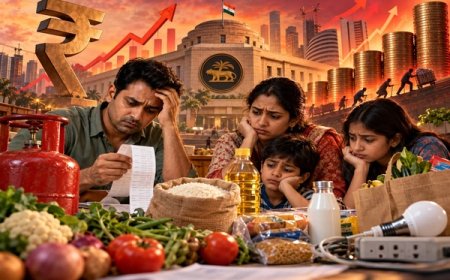
Beyond institutional debates, everyday economic struggles has played a massive role. High unemployment rates among the educated youth and the rising cost of living have been major pain points. For many lower and middle-income families, the daily struggle with price rises has outweighed the appeal of larger national narratives. Furthermore, a natural anti-incumbency factor has set in after a decade in power, as voters become more critical of unfulfilled promises. The initial excitement that brought the government to power in 2014 has naturally evolved into a demand for accountability.
The Centralisation of Power
Over the past decade, the BJP’s governance model was heavily centred around the Modi-Shah duo. While this top-down approach initially projected strength and decisiveness, it eventually led to a perception of over-centralisation. Critics and voters alike have begun to feel that regional leaders are being sidelined and local issues are being ignored in favour of a ‘one-size-fits-all’ national campaign. In a diverse country like India, local representation and regional pride matter deeply to voters.
Social Narratives and the Constitution
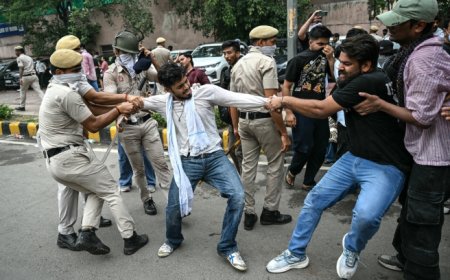
During the 2024 campaign, the opposition had successfully amplified concerns that an overwhelming majority for the ruling party might lead to alterations to the Constitution, particularly regarding reservations. Whether true or not, this narrative resonated strongly with several marginalised communities, leading them to vote defensively to protect their constitutional rights.
Agrarian Distress
Lingering dissatisfaction among farmers, particularly in parts of North and West India, also played a crucial role. The handling of the farmers’ protests in previous years left a lasting impact, and rural distress remains a critical issue that many felt was not adequately addressed by the central leadership.
However, an objective analysis must also acknowledge that to say the duo has entirely lost public respect would be an overstatement. The BJP has emerged as the single largest party by a wide margin and retaining a massive vote share across the country. Prime Minister Modi remains one of the most popular leaders globally. The government’s targeted welfare programmes- delivering direct benefits like housing, rations, and gas cylinders to the poor- continue to hold a strong support base. Furthermore, their focus on cultural revival and national security still finds deep resonance with millions of Indians. Supporters view the leadership not as authoritarian, but as decisive and necessary for national security, infrastructure development, and elevating India’s global standing.
All the same, the unmistakable conclusion is that the narrative surrounding the Modi-Shah leadership has become deeply polarised. While supporters see strong, visionary leaders working towards a developed India, critics and opposition voices argue that their governance style undermines democratic institutions and evades accountability. The 2024 election results suggest that the Indian voter is carefully weighing these arguments, signalling a desire for a more consultative, inclusive, and transparent style of governance within the framework of coalition politics.
What's Your Reaction?