

























The Unstoppable Rise of The Enraged Gen Z

The Generation Z, raised entirely in the smartphone and social media era, are true digital natives who process information rapidly and globally. Having come of age amid economic instability, a global pandemic, and a looming climate crisis, they tend to be highly pragmatic, financially anxious, and deeply socially conscious. They prioritise authenticity and institutional transparency, comfortably navigate fluid social identities, and instinctively use digital platforms as powerful tools for grassroots political mobilisation and challenging traditional power structures.
The ongoing crisis surrounding the NEET-UG examination paper leak has metamorphosed from a localised student grievance into a full-blown national agitation. At the epicentre of this storm is climate activist and education reformer Sonam Wangchuk, whose indefinite ‘fast unto death’ demanding the resignation of Union Education Minister Dharmendra Pradhan has gripped the capital. The initial plea for educational accountability has now escalated into a massive confrontation, exposing the severe consequences of state apathy and a gross miscalculation by the central administration.
The Modi administration’s initial response to the NEET controversy was characterised by a distinct underestimation of the youth’s resolve. The government continued operating under the assumption that the protests would eventually lose momentum- strongly believing that student agitations die down due to internal discord, fatigue, fear of police action, or diminishing public interest. This wait-and-watch approach has proven to be a suicidal error.
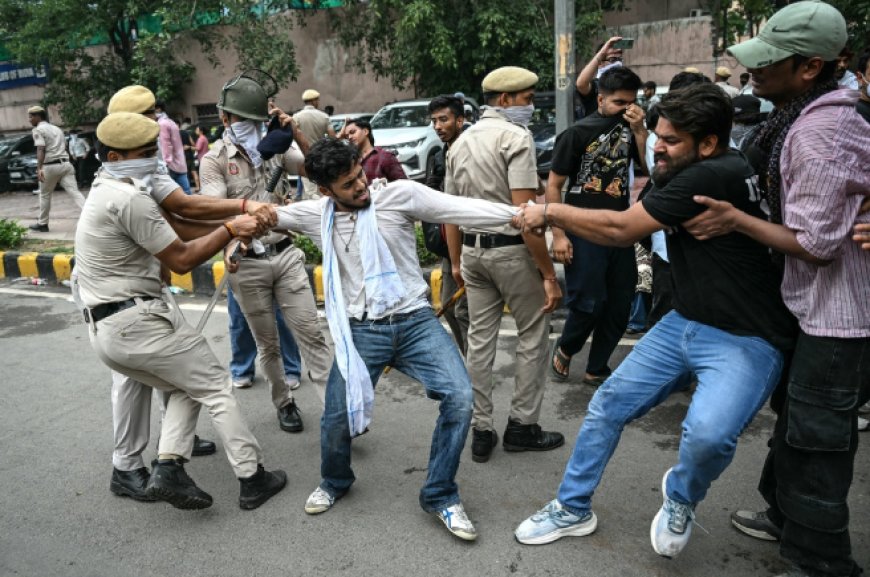
Instead of opening channels for democratic dialogue, the state’s casual apathy has fuelled a deeper sense of betrayal among millions of students who feel their futures are being jeopardised. The forced hospitalisation of Wangchuk by the Delhi Police on the 21st day of his fast, despite his refusal of intravenous treatment, did further alienate the masses. The administration’s prohibitory orders and heavy police deployment did only reinforce the perception of an insensitive government trying to silence logical dissent rather than address systemic corruption.
The political void left by traditional opposition in channelling Gen Z’s anger was quickly filled by the ‘Cockroach Janta Party’ which has successfully mobilised disgruntled youth, transforming a localised protest into a nationwide youth uprising. The organisation’s ability to coordinate the massive march to the Parliament at the opening of the Monsoon Session, demonstrates a truly sophisticated level of organisation that has visibly unsettled the ruling BJP leadership.
The sheer scale of the Delhi congregation has already caused panic within the corridors of power. The participation of civil society members, prominent public figures, and opposition leaders has greatly emboldened the movement’s base. It is no longer just about a compromised exam; it is now a referendum on the government’s ability to safeguard the futures of its youngest citizens.
As Wangchuk’s health is deteriorating fast, the stakes have reached an unprecedented high. Protesters have issued stark warnings of dire consequences should the activist suffer the worst outcome. Drawing parallels to recent political upheavals in neighbouring nations like Nepal, where mass youth and civil society mobilisation brought governments on the knees, the agitating youth have made it clear that the current administration is sitting on a barrel of dangerously active gun powder. Any big tragedy involving Wangchuk could serve as the catalyst for uncontrollable nationwide unrest, completely outstripping the state’s law enforcement capabilities.
The current standoff is an entirely self-inflicted wound by the administration. The government’s callous attitude toward the NEET leak has transformed a legitimate demand for mere academic integrity into a formidable political challenge.
To de-escalate this grave crisis, three immediate steps are imperative:
· Unconditional Dialogue: The administration must step down from its rigid stance. The government, instead of testing the limits of the youth, should initiate immediate discussions.
· Accountability at the Top: The demand for the Education Minister’s resignation is no longer just a political talking point; it has become the minimum acceptable threshold for the protesting youth to believe that the government is taking moral responsibility.
· Systemic Overhaul: Beyond immediate political sacrifices, the government must announce a credible, time-bound, and transparent overhaul of the examination infrastructure.
The situation has breached the threshold of conventional protest. If the administration continues to rely on police force and bureaucratic apathy rather than democratic engagement, it risks igniting a socio-political firestorm that could permanently damage its mandate among the nation’s youth. The writing is on the wall: ‘Ignore the youth at your own Peril’.
Evidently, the central lesson of the escalating crisis is that conventional political mechanics are failing in the face of an organic demographic uprising. Historically, the ruling political leadership has demonstrated a formidable ability to manage traditional opposition. Through a combination of strategic alliances, statecraft, enticements, and the application of state apparatuses, the administration has often succeeded in keeping political rivals in check and outmanoeuvring regional coalitions. However, the playbook used to manage veteran politicians is proving entirely ineffective against enraged students and a decentralised, satirical movement like the CJP. The administration cannot leverage political ambition against a formidable demographic that feels its future has already been compromised by systemic failures. When a movement is driven by unemployed youth, digital organising, and a respected 59-year-old climate activist willing to fast to death, traditional political coercion, whether through fear or favour, finds no purchase.
Furthermore, this crisis has catalysed a shift in how the country’s intelligentsia and civil society view the central administration. What might once have been dismissed as an isolated administrative failure regarding the NEET-UG exams, is increasingly being interpreted by academics, legal experts, and civil society leaders as a symptom of a broader, systemic consolidation of power. The heavy-handed response to the protests and the initial attempts to silence the movement’s digital footprint have amplified narratives among critics who view the current regime’s governance style as stubbornly unresponsive to ground realities and detrimental to democratic accountability.
The ruling community has to wake up to an undeniable truth : The 2026 youth rebellion is vastly bigger and fiercer than the 2011 ‘India Against Corruption’ protests. Today’s highly tech-savvy students will no longer spare selfish and deceptive politicians who make their lives miserable. These young people are too informed to be fooled and completely fearless when it comes to taking risks. Pushed into a corner by corrupt leaders, they are fighting back with unstoppable anger because they feel they have absolutely nothing left to lose.
What's Your Reaction?