





















From Justice Patnaik’s Constitutional Courage to the Shadow Over Courtroom No. 7


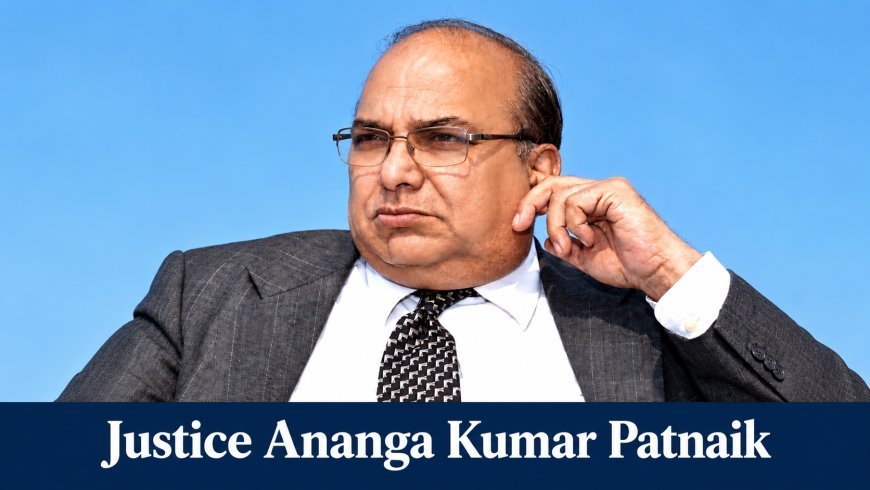
On July 10, 2013, a two-judge Bench of the Supreme Court of India did something that altered the moral architecture of Indian democracy. Sitting in Lily Thomas v. Union of India, presiding Justice Ananga Kumar Patnaik and Justice S.J. Mukhopadhaya were confronted with a challenge to Section 8(4) of the Representation of the People Act, 1951- a statutory shield that allowed sitting Members of Parliament and Members of Legislative Assemblies convicted of serious crimes (carrying sentences of two years or more) to retain their seats simply by filing an appeal within three months.
The political stakes could not have been higher. An entire political class had a vested interest in preserving its immunity. Yet Justice Patnaik did not blink, equivocate, or search for procedural escape hatches. He did not claim that striking down a parliamentary statute affecting the composition of legislatures required a five-judge Constitution Bench. Reading Articles 102(1)(e) and 191(1)(e) alongside the guarantee of equality under Article 14, Justice Patnaik’s two-judge Bench struck down Section 8(4) as ultra vires the Constitution. The Court ruled that the Parliament had no competence to create a privileged class of convicted lawmakers. The verdict was immediate, unambiguous, and globally hailed as a triumph of judicial spine over the executive and legislative convenience.
More than thirteen years later, on September 23, 2026, another two-judge Bench of the Supreme Court faced a moment of comparable democratic consequence- and offered the nation a study in stark contrast.
The Split Verdict That Froze Accountability
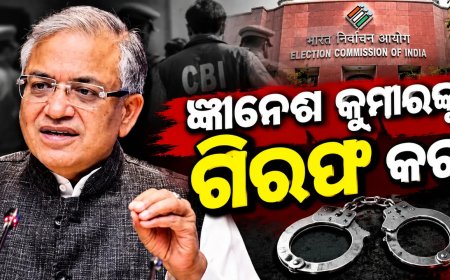
At issue before Justice Dipankar Datta and Justice Satish Chandra Sharma was the constitutional validity of Sections 6, 7, and 8 of the Chief Election Commissioner and Other Election Commissioners (Appointment, Conditions of Service and Term of Office) Act, 2023- the very statute under which incumbent Chief Election Commissioner Gyanesh Kumar was appointed.
In March 2023, a five-judge Constitution Bench in the ‘Anoop Baranwal v. Union of India’ matter had already settled the foundational principle: to insulate the Election Commission of India from executive capture under Article 324, appointments must be made by a neutral committee comprising the Prime Minister, the Leader of the Opposition, and the Chief Justice of India, until Parliament enacted a law that kept the absolute ‘freedom’ and ‘neutrality’ components intact. The Parliament responded instantly but chose merrily to ignore the ‘neutrality’ factor obviously on wicked purpose. The political rogues ganged up and passed the 2023 Act which removed the CJI replacing him with a Union Cabinet Minister nominated by the Prime Minister. Thus the executive capture of the election commission was achieved without much hue and cry. The media agencies- most of them slaves to the government for ad revenue favours, kept quiet and made hay as the sun kept shining on them.
This time around, Justice Dipankar Datta met the challenge with the same clarity that defined Justice Patnaik in 2013. Rejecting the government’s plea to refer the matter to a larger Bench, Justice Datta held that the constitutional principles governing electoral independence were already settled by the five-judge Bench in ‘Anoop Baranwal’; a two-judge Bench needed only to test the 2023 statute against those established parameters. Invoking a pointed cricket analogy, Justice Datta observed that even accurate decisions invite suspicion if the process of selecting the umpire is skewed. Because a Cabinet Minister is bound by collective responsibility to the Prime Minister, the executive enjoys a built-in two-to-one majority, reducing the Leader of the Opposition’s presence to something ‘largely ornamental’. Then came Justice Satish Chandra Sharma’s shocking dissent. Disagreeing with Justice Datta, Justice Sharma held that whether Parliament was justified in excluding a neutral selector from the ECI appointment panel raised a novel, ‘substantial question of law as to the interpretation of the Constitution’ under Article 145(3), which a two-judge Bench could not finally adjudicate. Going a step further, Justice Sharma observed prima facie that the selection committee could not be considered structurally biased merely because the executive held a dominant presence. Justice Sharma clearly betrayed the nation, acting without a single thought for the day his machinations would inevitably be laid bare.
Because of Justice Sharma’s refusal to adjudicate the statute on the existing five-judge precedent, the two judges ultimately agreed to place the petitions before Chief Justice of India Surya Kant to constitute a larger Bench. Perhaps on the insistence of Justice Datta, the judgment contains a painful irony. Referring cases to a Constitution Bench routinely stalls them for 5 to 20 years- an ‘institutional embarrassment’ (Anoop Baranwal alone took eight years). Yet, by insisting on a reference where the law was already settled, Justice Sharma ensured that the executive-controlled appointment process and its appointees remain protected for years to come.
A Daughter’s Appeal, a Bypassed Roster, and a Muted Courtroom
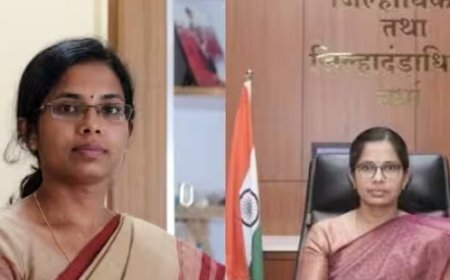
If the split verdict on the ECI law raised constitutional eyebrows, a second proceeding before Justice Sharma on that exact same day- September 23, 2026- turned disquiet into a deafening institutional alarm : On September 2, 2026, a Division Bench of the Allahabad High Court comprising Justices Atul Sreedharan and Achal Sachdev delivered a blistering judgment quashing the preventive detention of Akriti Chaudhary, a 25-year-old Delhi University history graduate. Chaudhary had been booked under the draconian National Security Act (NSA) in May 2026 following a Noida workers' protest. The detention order was signed by the District Magistrate of Gautam Buddh Nagar, IAS officer Medha Roopam who happens to be the daughter of the controversial CEC Gyanesh Kumar. The Allahabad High Court found the detention order ‘worthy of derision,’ devoid of credible material, and passed ‘without application of mind’ in violation of Article 21. The High Court warned that such 'despotic and arrogant’ behaviour by bureaucrats risked reducing Uttar Pradesh to a lawless state. Holding Medha Roopam guilty of violating her oath, the court ordered Rs.5 lakh in compensation for the student- to be deducted directly from the salaries of Roopam and the other responsible officers. When the badly humiliated Medha Roopam challenged this order before the Supreme Court, three extraordinary anomalies converged:
The Roster Bypass: Under the Supreme Court’s roster notification (effective July 13, 2026), matters relating to habeas corpus and preventive detention (categories 2201–2202) are assigned exclusively to the four senior-most Benches—headed by CJI Surya Kant, Justice Vikram Nath, Justice B.V. Nagarathna, and Justice M.M. Sundresh. Moreover, Justice Nagarathna’s Bench was already hearing connected petitions arising out of the very same April 2026 Noida labour protest crackdown (including petitions concerning journalist Satyam Varma and law student Yogesh Meena). Standard judicial convention dictates that connected matters travel to the Bench already seized of the dispute. Instead, through the administrative prerogative of the Master of the Roster, Medha Roopam’s petition was listed out of turn before a Bench headed by Justice Satish Chandra Sharma (sitting with Justice N. Kotiswar Singh), which did not hold the preventive detention roster.
The Muted Hearing: During the hearing of Roopam’s plea, the public video-conferencing audio feed remained muted throughout, prompting the ‘Lawyers Association for Constitution’ to address an open letter of protest to CJI Surya Kant warning that out-of-turn listings before a specially assigned Bench and muted proceedings erode public faith in the judiciary.
The Instant Stay and Quiet Revision: Justice Sharma’s Bench granted immediate interim relief. An initial version of the September 23 order uploaded by the Court stayed the entire Allahabad High Court judgment. Only after public uproar ensued was a quietly revised order issued on September 25, clarifying that the stay was restricted to the adverse strictures against Medha Roopam and the recovery of the Rs.5 lakh penalty from her salary, leaving the quashing of Chaudhary’s NSA detention intact.
The Unspoken Conflict: Official Empanelment Records
What transformed these parallel September 23 rulings from a debate over judicial philosophy and roster administration into a crisis of judicial propriety was a disclosure drawn directly from official court records.
According to the advocate database of the Madhya Pradesh High Court- Justice Sharma’s parent High Court prior to his Supreme Court elevation in November 2023- his elder son, Advocate Siddharth Sharma (enrolled in 2017), has been empanelled as Standing Counsel for the Election Commission of India (ECI) since July 10, 2024. Official records further reflect that he serves as Standing Counsel for the Central Board of Direct Taxes (CBDT) and the Income Tax Department (since 2023), while Justice Sharma’s younger son (enrolled in 2020) also serves as Standing Counsel for the Madhya Pradesh Public Service Commission (MPPSC).
The Restatement of Values of Judicial Life, adopted by the Supreme Court in 1997 as the ethical charter for the higher judiciary, is unequivocal: a judge must avoid presiding over matters where close family members have a professional nexus with a litigating statutory body, because justice must not only be done, but must also be seen to be done.
Consider the convergence on September 23, 2026:
In the morning, Justice Sharma sits on a Bench deciding the fate of the law governing the appointment of the Chief Election Commissioner and Election Commissioners, and dissents from Justice Datta to defer a final ruling to a Constitution Bench.
On the same day, heading another Bench outside the regular preventive detention roster, he grants interim relief to the daughter of the incumbent Chief Election Commissioner, shielding her service record and salary from the Allahabad High Court’s Rs.5 lakh accountability order.
Throughout both the proceedings, his son remains the empanelled Standing Counsel for the Election Commission of India before the Madhya Pradesh High Court- with no public record indicating that this familial link was disclosed to the petitioners in either case.
In 2013, Justice A.K. Patnaik proved that a two-judge Bench armed with constitutional conviction is enough to bring the most powerful politicians in the country under the rule of law. On September 23, 2026, the events surrounding Justice Satish Chandra Sharma’s courtroom demonstrated the exact opposite: how procedural referrals, roster deviations, and undisclosed familial ties to state panels can hollow out institutional credibility from within. When the citizenry is left asking
why the referee’s family represents the commission, and why the commissioner’s daughter receives an out-of-turn shield, it is not merely a single judge’s propriety on trial- it is the moral authority of the Supreme Court itself.
What's Your Reaction?