



















THE GREAT GREEN EYEWASH: WHY ODISHA’S MANDATORY EV POLICY GOT SABOTAGED



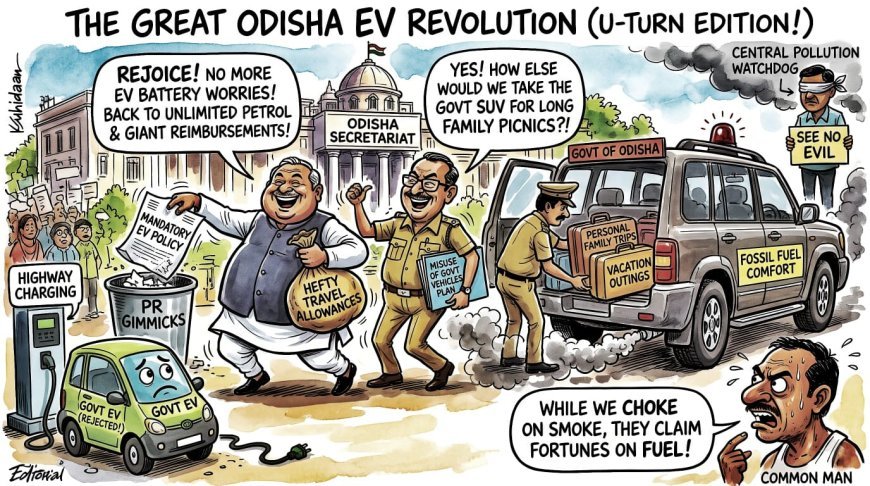

The grand policy was supposed to be a masterstroke for the environment. Following a huge clarion call by the government at the centre to reduce our carbon footprint, ensure cleaner environments, and give our citizens unpolluted air to breathe, the Odisha government initially mandated Electric Vehicles, specifically for official use. It was heralded as a progressive leap. Yet, in a shocking display of backtracking, the state government has recently withdrawn the mandatory EV policy, quietly allowing petrol and diesel vehicles back into the government fleet.
This happened for obvious reasons : Not for a lack of funds. Not for failed tender processes, as cited in the official circulars which has fooled the gullible, innocent masses who forget too soon why and how the policy ever came. The real story behind this sudden U-turn is a classic tale of bureaucratic and political selfishness.
The Official Joyride is Saved
If a spade be called a spade, the conscious people are aware that the super smart bureaucrats and politicians abuse and overuse government motor vehicles much beyond their designated official work. From dropping children to school, running personal errands, to taking weekend family trips out of town, the official car is treated as a personal luxury chariot.
When the EV mandate was announced, these officials got very worried. EVs come with a strict limitation: one cannot simply fill up the tank in two minutes and travel far at will. Electric vehicles demand planned routes and restricted distances. For a bureaucrat or politician accustomed to treating a government vehicle as a free pass to travel anywhere, anytime, the EV became a highly restrictive collar. Their unrestricted joyrides were suddenly under threat.
The Golden Goose of Running Allowances
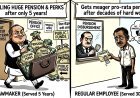
But it is not just about the convenience of unrestricted travel; it is also about cold, hard cash. The political community in power thinks exactly alike because they are notoriously well-known vehicle abusers. Many politicians and top officials receive hefty running allowances for road travel in their personal or officially assigned vehicles. Unfortunately, there is no overall cap on the total number of kilometres an MLA can travel in Odisha for official duties, constituency visits, or attending assembly sessions. They are entitled to claim a per-kilometre rate instead of facing a strict distance cap. Under recent revisions, they claim Rs.35 per kilometre apart from the fixed Monthly vehicle allowance of Rs.50,000 to assist with general transit and constituency coverage. This system is a golden goose.
These allowances are incredibly generous, often far exceeding the actual cost of travel and dwarfing even the highest commercial transport rates. It is a system that allows them to claim fortunes based on inflated mileage and fuel costs. This is something which makes the blood of ordinary folks boil.
Electric vehicles threatened to destroy this lucrative setup. Because EVs are so cheap to run- costing mere pennies per kilometre compared to petrol- it becomes impossible to justify the exorbitant fuel allowances they were accustomed to claiming. They simply cannot afford to misuse EVs and claim those same fortunes anymore. Therefore, politicians and bureaucrats joined hands in an unholy alliance for the policy withdrawal. They are all relieved that the EV mandate is gone, allowing the gravy train of inflated travel allowances to roll on undisturbed.
The Shield of ‘Practical Problems’
To cover up their personal inconveniences and financial losses, the system cleverly amplified the very real, but solvable, teething problems of electric mobility. The big worry they presented on paper was the battery charging issues on the highways. Indeed, a huge amount of time is wasted at charging points, and the network is not yet robust enough for long-distance, seamless travel.
Furthermore, they argued that battery vehicles are still not completely dependable or safe. There are valid concerns regarding degenerative batteries that lose capacity over time. In the event of any mechanical problems on a lonely highway, instant help cannot come, as local roadside mechanics are not equipped to fix complex EV drivetrains.
While these are genuine engineering and infrastructural hurdles, the masses face them every day. Bureaucrats and politicians are the ones most expected to encourage the public by leading exemplarily. So, if the government will not endure the growing pains of a new, green technology, they can never expect the common man to bear the burden. Instead of working to build a better charging infrastructure and solve these problems, the authorities used them as a convenient excuse to secure their petrol and diesel guzzlers, and their massive allowances.
A Hypocritical System
What is equally appalling is the deafening silence from New Delhi. The central government authorities, who are supposedly keeping a close watch on the states in matters of pollution control and environmental compliance, simply looked away. That is simply because the people sitting in the centre are as tricky as those in Odisha. Central authorities share the exact same privileges, the exact same mindset, and the exact same reluctance to give up their fossil-fuelled perks and bloated allowances. It is a brotherhood of convenience.
The entire EV changeover was nothing but an eyewash. It was a PR stunt designed to grab headlines and portray a falsely progressive image before global environmental forums. When the policy actually started hurting the personal comforts and wallets of the elite ‘babus’ and ‘netas’, it was quietly buried under the guise of administrative difficulties.
The rollback of the mandatory EV policy in Odisha is a glaring reminder of how our tricky system operates. The rules are always bent to serve the comfort and financial interests of those in power. While citizens choke on polluted air and are lectured daily on their civic duties to reduce carbon emissions, the hypocritical guys in the thoroughly corrupt system can stoop to any low for selfish reasons. The green revolution in government corridors has been smothered, not by a lack of technology, but by the sheer arrogance and greed of India’s self-serving bureaucracy and an extremely heartless political leadership.
What's Your Reaction?