















"Belonging: A Journey of Love"BOOK REVIEW BY MALABIKA PATEL



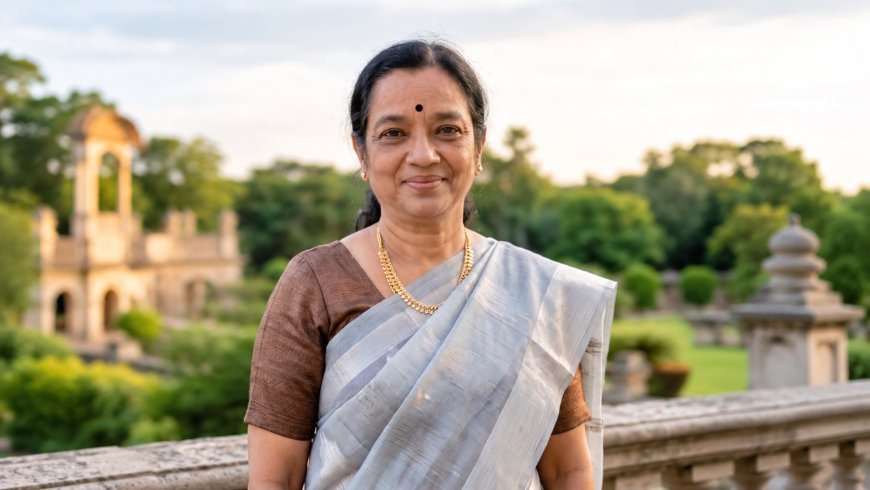
By Malabika Patel
Belonging: A Journey of Love
by Sonia Gandhi
Tender in grief, skilful in omission — a masterclass in selective memory from India’s most visible power centre.
Francis Bacon had observed that a rare few books are meant ‘to be chewed and digested’. Released on 10 November 2026, Sonia Gandhi’s 500-page memoir, Belonging: A Journey of Love, demands precisely that — not merely for its emotional resonance, but for how deftly it curates six decades of Indian public life. Framed upfront as a ‘personal memoir’ with politics merely as a backdrop, the book offers an absorbing chronicle of love and endurance that doubles as an exercise in historical self-preservation.
The Overwhelming Joys and the Lacerating Sorrows
At its most compelling, the narrative traces the extraordinary arc of an outsider becoming the ultimate insider. The opening chapters possess a fairy-tale warmth: an idyllic childhood and teenage in the village Orbassano, Italy; a whirlwind romance with Rajiv Gandhi starting at the Greek restaurant Varsity in Cambridge; winning over a reluctant father; and arriving in Delhi in January 1968 under the affectionate wing of Harivansh Rai and Teji Bachchan and getting married in an elegant intimate setting in the Prime Minister of India’s Residence. Fond vignettes of zipping through a quieter 1960s Delhi on a Vespa scooter, alongside crisp domestic details — home interiors, gardens, décor, banquets and encounters with famous personalities from Fidel Castro to Margaret Trudeau — give the memoir genuine charm. Her description of political triumphs carries equal weight: Indira Gandhi’s finest hour during 1971 Bangladesh victory and 1980 resurgence, Sonia’s own gruelling 2004 campaign, and the book’s finest passage — her ‘inner voice’ speech delivered in the Central Hall of the Parliament – declining the premiership and entrusting India’s stewardship to Manmohan Singh.
Yet every triumph in this chronicle is shadowed by tragedy. Readers learn of a little-known early sorrow: the loss of Sonia and Rajiv’s firstborn son in 1969, just two days after birth. Thereafter, the blows fall relentlessly —Sanjay Gandhi’s fatal 1980 air crash that devastated her mother-in-law and pulled a reluctant Rajiv into politics despite Sonia’s daily protests, and her own quiet, gritty recovery from two cancer surgeries. Her most arresting prose belongs to the assassinations. The graphic account of 31 October 1984 — mere hours after Indira returned from her fateful Bhubaneswar rally with three hand spun tribal saris — will move even hardened critics. Equally devastating is her admission regarding Rajiv’s murder in Sriperumbudur in 1991: more than three decades on, she has still never been able to look at photographs of his remains, bringing a lump to the reader’s throat.
Selective Cast, Glaring Silences
Where the memoir falters are in its striking absence of political introspection or regret. The darkest chapters of Congress governance are consistently sanitised, deflected, or excised:
Blame-shifting: The 1975 Emergency is laid squarely at Sanjay Gandhi’s door, glossing over Indira’s own appetite for absolute power. While the 1984 anti-Sikh riots are acknowledged as shameful, Rajiv’s infamous post-assassination remarks vanish, and responsibility for the delayed response shifts to Army Chief General A.S. Vaidya.
Conspicuous omissions: Operation Blue Star unfolds with no explanation of Bhindranwale’s rise. Rajiv’s innovative premiership reads like a devoted wife’s tribute — skimming past the Shah Bano controversy and the Sri Lanka–LTTE morass, whilst citing the 2004 Delhi High Court exoneration in the Bofors scandal without once naming prime suspect Ottavio Quattrocchi.
The UPA blind spot: Despite 19 years as Congress President and a decade steering the UPA, Sonia Gandhi maintains complete silence on the 2G, coal allocation, Commonwealth Games 2010, and National Herald controversies.
A curated cast: Major figures in the Congress party and governance are handled with selectivity. Manmohan Singh earns generous tribute with the epoch-making laws under his premiership, and veterans such as Pranab Mukherjee, Sharad Pawar, Sitaram Kesri, and Atal Bihari Vajpayee appear as milestones in her political maturation. By contrast, Maneka Gandhi is sketched with subtle malice — Sonia neatly attributing the family rift solely to Indira. Amitabh Bachchan warrants a single wedding cameo, and the notorious snub of barring former Prime Minister P.V. Narasimha Rao’s body from Congress headquarters goes entirely unexplained.
Style, Tone, and Narrative
Sonia Gandhi writes with fluency, intimacy, and disarming candour wherever the ground is safe. She freely acknowledges Indira’s temper, her own privileged status in India’s socio-economic milieu and her early embarrassment at Rajiv’s stiff set speeches — contrasting them with her own hard-won command of Hindi by 1998.
“Sweet is the taste of victory”, she writes after the surprise results of 2004 rewarding her back-breaking campaign through the length and breadth of the vast country.
Yet this openness serves a shrewd rhetorical purpose. By insisting the work is ‘personal, not political’ and, Gandhi erects a polite shield against historical scrutiny. Beneath that veil, however, the book is unmistakably political in its manoeuvres: from her widely publicised standoff with Penguin over retaining the acronym ‘RSS’ (starting from page 132 onwards) and her pointed complaint that Barack Obama failed to credit Indira for the Green Revolution – cheerfully confessing her bias as Indira’s daughter-in-law – to closing chapters that indict ‘communalist and divisive forces’ whilst positioning Rahul Gandhi as Leader of the Opposition.
As a human portrait, Belonging is undeniably moving. Its grief is unfeigned, its resilience formidable, and its closing reflection — that love steadied her through cruelty and deceit — rings true. As a candid reckoning from one of modern India’s most consequential figures, however, its refusal of self-criticism and its calculated erasures leave the record half-told. In the end, this memoir by a ‘videshi bahu’ is compelling reading — not as a definitive history, but as a revealing study in what power chooses to remember, and what it resolves to forget. That said, there is no doubt that the book is a labour of love. In her own words, it took “a long time, writing and rewriting, with many breaks in between.”
What's Your Reaction?