










The Façade of Governance: Odisha’s Leadership at a Crossroads

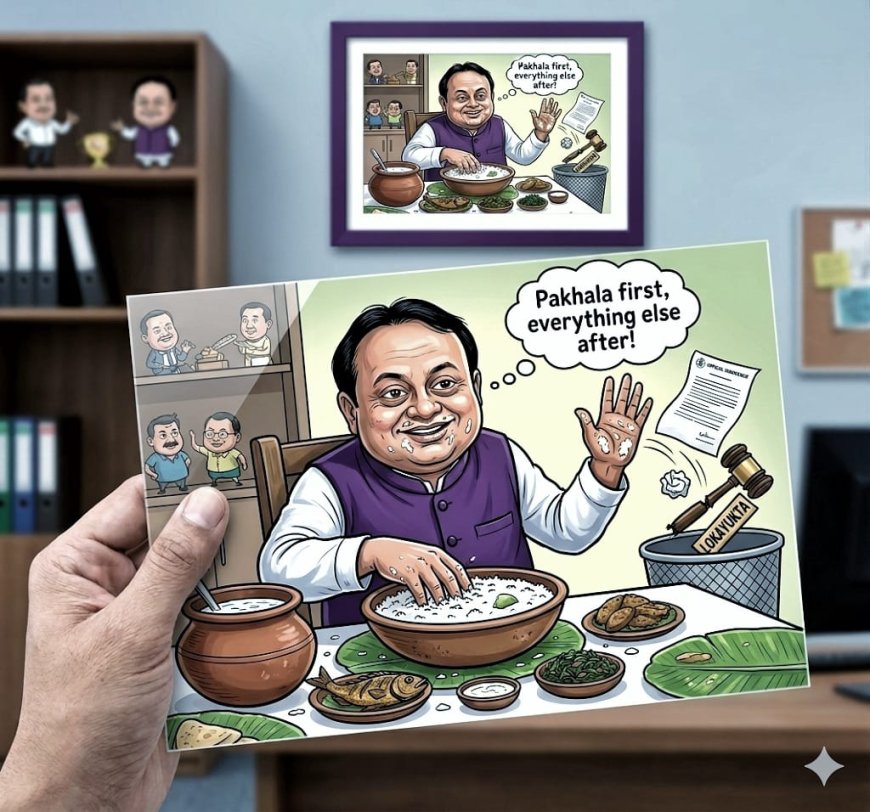
This article examines the current political climate in Odisha focusing on the administrative challenges and public criticisms surrounding the tenure of Chief Minister Mohan Majhi.
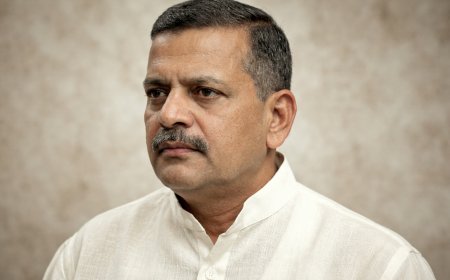
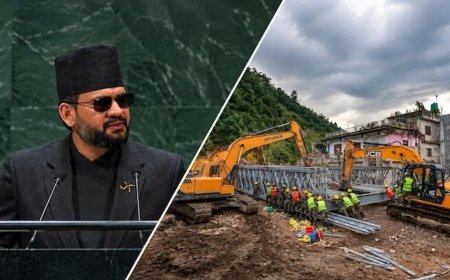
When Mohan Charan Majhi was sworn in as the 15th Chief Minister of Odisha, the narrative was one of a ‘son of the soil’ rising to power. However, nearly two years into his term, the initial euphoria has been replaced by a growing sentiment of administrative paralysis and ethical decay. Critics argue that beneath the populist veneer lies a leadership struggling with the complexities of modern governance, increasingly beholden to high-command directives rather than the needs of the Odia people.
A Cabinet of One: The Portfolio Paradox
One of the most glaring criticisms of the Majhi administration is the extreme centralization of power. Despite leading a state with complex developmental needs, the Chief Minister continues to hold six critical portfolios, including Home, Finance, and General Administration.
By refusing to expand his ministry or delegate authority, Majhi has effectively created a bottleneck at the highest level of the government. This ‘headless’ approach extends to state corporations, many of which remain without dedicated leadership, stalling crucial infrastructure projects and social welfare schemes. Furthermore, there are persistent reports that scholarly advisors-men of the stature of Prakash Mishra- find their counsel frequently ignored in favour of a narrow circle of political handlers.
The Mineral Mafia: A Silent Partnership in Plunder :
The most stinging irony of the Majhi administration is the alleged resurgence of the ‘Minor Mineral Mafia’ in his own backyard. Once a vocal critic of mining irregularities, Majhi’s current silence is being interpreted as ‘complicity’ mainly by the rumour mill. In districts like Keonjhar and Mayurbhanj, the illegal extraction of sand, stone, and crusher materials has reached a fever pitch. While the Chief Minister maintains a public image of tribal simplicity, the talk of the town suggests that local administration officials have been given a ‘wink and a nod’ to allow these syndicates to operate with ease and without fear. This isn’t just a failure of oversight; it is a systemic betrayal. By allowing the ‘minor mineral mafia’ to flourish, the administration is effectively draining the state’s natural wealth into the pockets of a few, while the very tribal communities Majhi claims to represent see their lands degraded and their futures sold for the price of an illegal truckload of river sand.
The Liquor Betrayal: From Prohibition to Promotion
Perhaps the most egregious legal and moral flip-flop of this tenure involves the state’s excise policy. During the election campaign, the promise was clear: a move toward a ‘Dry Odisha’ to protect families from the scourge of alcoholism that ravages tribal and rural society. However, the reality under Majhi is a brazen expansion of the ‘ON’ shop culture. The legal framework has been quietly tweaked to facilitate the licensing of bars within hotels and outfits that make alcohol more accessible than ever. This is not just a broken promise; it is a calculated economic decision to prioritise excise revenue over the social health of the citizenry. While the government masks this with a ‘de-addiction cess,’ the optics of promoting bars while tribal community members suffer from poverty and addiction is a jarring testament to the administration’s misplaced priorities.
The ‘Transfer Industry’ and Ministerial Extortion
The administrative decay is most visible in the ‘transfer industry’ that has allegedly taken root under Majhi’s nose. Because the Chief Minister has failed to assert his authority over his cabinet, a culture of ‘bribery for postings’ has become an open secret. Junior and senior government employees alike find themselves at the mercy of ministers who are reportedly ‘scooping out’ massive bribes for routine transfers. This ‘pay-to-play’ system ensures that only the most corrupt, rather than the most competent, occupy sensitive posts. The Chief Minister’s inability- or unwillingness- to rein in these ‘extortionate’ colleagues suggests a leader who is either a prisoner of his own cabinet or a silent beneficiary of the chaos.
The Conflict of Public Image and Political Reality
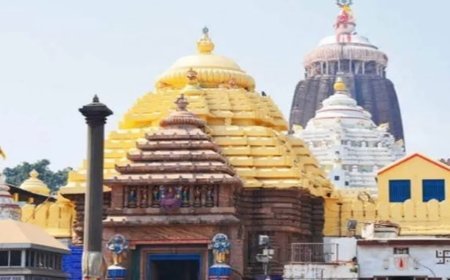
The subject’s public persona often clashes with the reality of his actions, particularly regarding his ‘Tribal Identity’. While he frequently makes high-profile visits to Hindu temples in ‘spectacular style,’ critics point out a notable silence regarding the exclusionary practices at these sites. A prime example is the ‘Jagannath Temple’, where complex protocols often affect his own community, yet he chooses not to address these systemic barriers. Majhi is not an orthodox Hindu to enter the majestic shrine just as and when he pleases, particularly because ‘Santhals’ are traditionally beef eaters. Even if he does not consume the meat himself, his predecessors did. That is why ISKCON devotees who follow a much stricter Hindu culture than most so called native Hindus, are not allowed inside the shrine. They had warded off Indira Gandhi for having married a Parsee who is a worshipper of the ‘Fire God’ the way Hindus do.
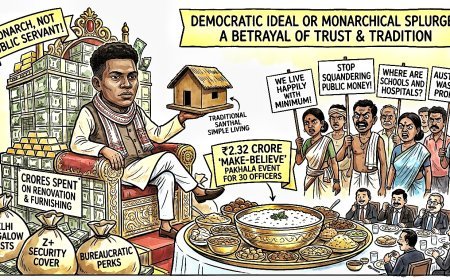
This disconnect extends to his ‘personal austerity’, or lack thereof. He has faced significant criticism for ‘devouring’ expensively elaborate delicacies in the public eye, the way he did on the so called ‘Pakhal Dibas’ along with his political as well as bureaucratic colleagues. Neither the rice he ate was true ‘Odia Pakhala’, nor was the day hot enough to celebrate the soothingly cool dish. The illogically chosen March day when the cool spring breeze is still blowing, has not been challenged by any Odia individual. The ‘Pakhala Dibas’ should occur in the middle of May or beginning of June when the day temperatures are scorching hot. This display of costly food meals by Majhi and co. is seen as particularly insensitive against the backdrop of ongoing reports of crop failures and starvation within tribal pockets, creating a stark contrast between his private indulgence and the public's suffering. Furthermore, his lifestyle choices have drawn fire from those who believe he is distancing his family from their roots; he is accused of shielding his children from indigenous culture in favour of western luxuries and modern comforts.
Perhaps the most damaging to his political credibility is his stubborn unwillingness to install the Lokayukta. Despite the body being fully constituted by the previous government, CM Majhi has refused to operationalise it. This move is seen as a direct contradiction to his ‘zero tolerance for corruption’ campaign promise, suggesting that while he projects an image of transparency, he is actively obstructing the very institutions designed to ensure it.
What's Your Reaction?