



















A CONVICTION IN LIMBO: HOW THE COURTS OPENED THE GATES FOR DILIP RAY
A deep dive into the Dilip Ray coal scam case, Delhi High Court’s controversial stay on conviction, and the debate over whether India’s judiciary is enabling convicted politicians to return to power.

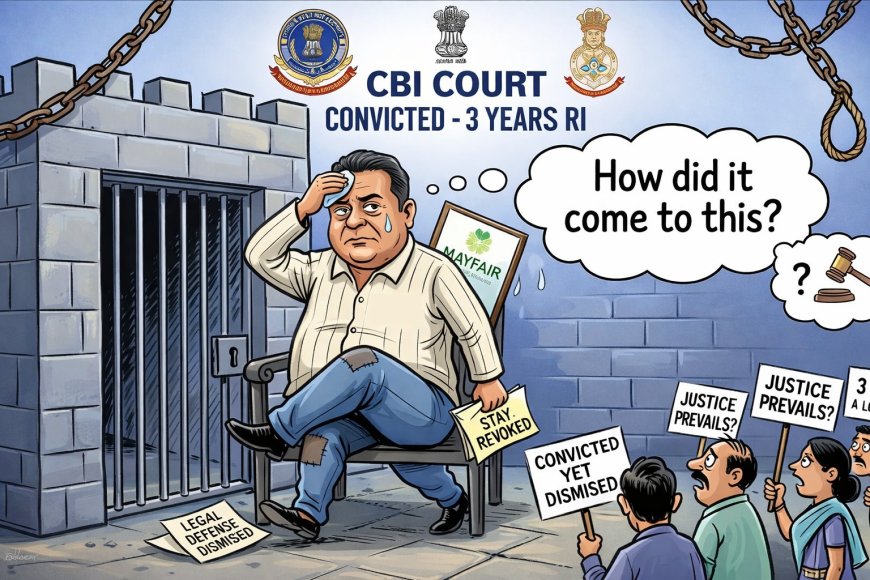
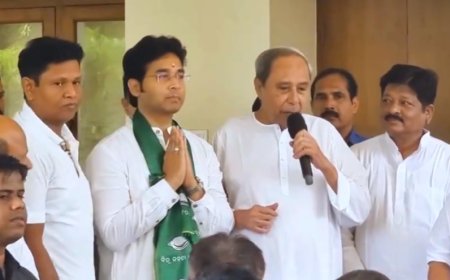
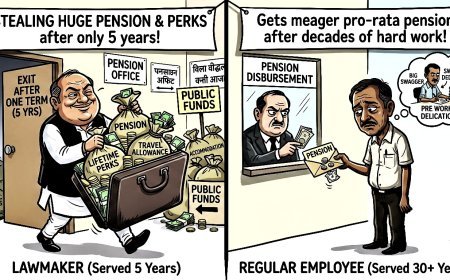
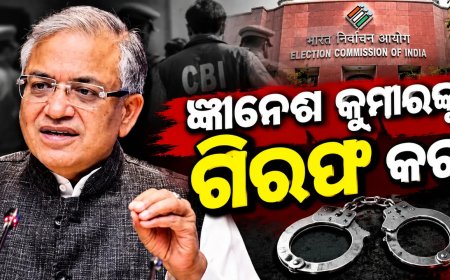
In October 2020, a Special CBI Court found Dilip Ray conclusively guilty of criminal conspiracy, breach of trust, and cheating in the 1999 coal block allocation scam. The trial, conducted with the rigorous hearing expected in high-stakes corruption cases, resulted in a three-year sentence. Yet, the Delhi High Court intervened in April 2024 with a move that can only be described as a masterclass in judicial empathy for the powerful. The Delhi High Court did this strange job only to allow convict Dilip Ray to contest the 2024 elections. The unusually big-hearted presiding Justice Swarana Kanta created has gifted students of law a jarring case study in how the scales of justice in India can be tilted by ‘extraordinary discretion’. While the common man navigates a rigid and often unforgiving judicial system, Ray’s ability to secure a ‘stay on his conviction’ raises fundamental questions about the judiciary's role in safeguarding political careers versus upholding the rule of law as even obtaining merely a ‘suspension of sentence’ is unthinkable in India, which happens in rarest of rare cases.
The entire subcontinent had rejoiced on July 10, 2013, when the legal landscape regarding the disqualification of convicted persons changed by a landmark Supreme Court ruling on the Lily Thomas v. Union of India case. The bench of extraordinarily courageous Justice A.K. Patnaik and Justice S.J. Mukhopadhaya had delivered this much awaited verdict. They struck down Section 8(4) of the Representation of the People Act, 1951. Previously, this section allowed sitting MPs and MLAs a three-month window to appeal their conviction without losing their seats. The court ruled that any Member of Parliament or State Legislature convicted of a crime and sentenced to a minimum of two years’ imprisonment would stand disqualified immediately from the date of judgment. Social activists, reformers and anti-corruption crusaders hailed the grand judgment for days satisfying themselves that criminals and crooks would be out of the political arena forever. India, they imagined, would have only honest, ethical and incorruptible governments at all times.
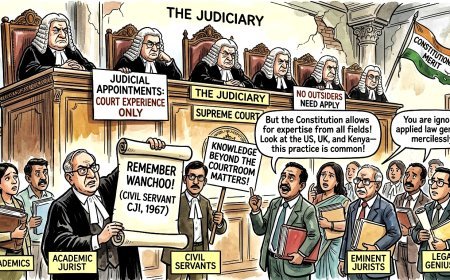
Normally, in rarest of rare cases, appeal courts slap a stay on the ‘sentence’, never on the ‘conviction’. Thus the landmark Supreme court judgement has been consigned to the garbage bin by the High Court judges despite Supreme Court’s clear rulings to have political corruption cases fast-tracked to reassure the masses that the judiciary is perfectly sensitive to public sentiments. But the enormously sympathetic presiding judge Justice Sharma was worried that if the conviction were not put on hold, ‘patriot’ Dilip Ray would suffer ‘irreversible consequences’ by losing the political opportunity to become law maker. Thus a ‘convict was mercifully awarded the right to fight election though he eventually bit dust in spite of a strong anti-establishment undercurrent across Odisha. Incidentally, the CBI had kept appealing to the apex court successively to raise Dilip Ray’s sentence to a life term in jail. Yet the Delhi high court created the most troubling precedent knowing fully well that the ‘protection of a political career’ cannot ever become a valid legal ground to bypass a ‘conviction for corruption’. The trial court’s findings were based on evidence; the High Court’s stay was based on sentiment. By prioritising a corrupt politician's electoral aspirations over the finality of a trial court’s judgment, the bench has arguably done a ‘disservice’ to the nation’s anti-corruption mandate.
Ray is of course a perfect gentleman, at least outwardly. He makes no enemy because he never passes bitter comments even on bitterest detractors, no matter what.
A long forgotten, currently relevant ‘1999 Airport incident’ be brought up now for public reaction : Ray was the Union Minister of State for Coal in the Atal Bihari Vajpayee government. The security and customs officials at the international airport in Delhi allegedly intercepted him to find in his possession a significant amount of unaccounted foreign currency- all this during a period of high political sensitivity. While Ray claimed the money was for legitimate purposes or associated with his business interests, the optics of a sitting Union Minister being ‘caught’ by customs at an airport were disastrous for the government’s image. Although this incident did not lead to his immediate resignation, it severely damaged his standing within the NDA fold. Combined with the brewing internal power struggle in Odisha between him and Naveen Patnaik, this ‘airport embarrassment’ provided the political ammunition needed for his eventual exit from the Ministry in May 2000. For decades, the shadows of controversy have followed him, yet the current legal and political climate seems intent on providing him a sunny path to the ballot box.
Another false narrative surrounding Ray has long been gilded by his proximity to the late Biju Patnaik. It is widely whispered that Ray’s care for the elderly statesman in his final years was less about a ‘great human heart’ and more about political self-preservation and the consolidation of wealth. Biju Patnaik, a statesman known for keeping his own children out of the political fray, groomed protégé like Ray. In the 1990-1995 period, Biju Babu had granted Ray unprecedented independence as a state minister. Critics and insiders alike suggest this was the era where the foundations of Ray's ‘immeasurable wealth’ were laid- not through public service, but through political manipulation and the exploitation of the patriarch's trust. Looking after Biju Patnaik in his last years was not charity; it was a moral and political tax paid to maintain public legitimacy while building a personal empire. It is public knowledge that Biju treated his political colleagues as members of his family. Mastermind Dilip had taken advantage of this unique situation and successfully created the image of a man who has mastered the art of the ‘political survivalist’. While Ray walks free on the strength of the ‘extraordinary discretion,’ the irony is stark: a man found guilty of ‘white-collar crime’ is permitted to return to the very legislative halls he was found to have brazenly dishonoured.
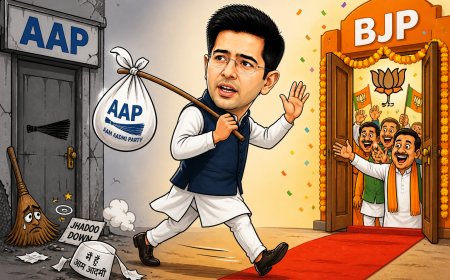
The BJP’s anti-corruption rhetoric now rings hollow primarily because it extended political patronage to a convicted individual without giving him the party ticket. By aligning with a figure whose eligibility rests on a ‘rare’ judicial reprieve, the party abandons its moral high ground. This marriage of convenience suggests that for the BJP, political optics outweigh principled consistency, permanently staining its reformist image.
What's Your Reaction?