














Armour for the Servants, Alms for the Masters : Democracy Mocked !

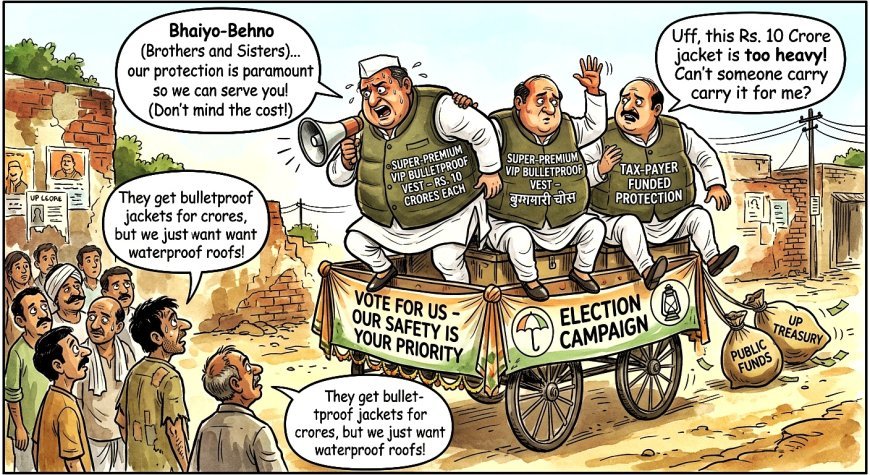
While security agencies argue the bulletprrof jackets are an intelligence-driven necessity, critics point to models like the UK’s independent risk boards to argue that state protection must be based on objective threats rather than political status.
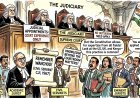
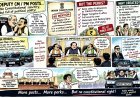
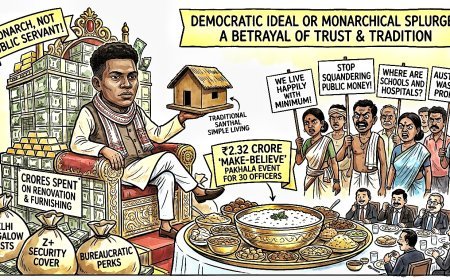
The Uttar Pradesh government has decided to provide advanced, Rs10-lakh bulletproof jackets to 52 frontline political leaders. This strange decision has reignited a fundamental debate about the relationship between elected officials and the public they serve. The state is awfully busy preparing for the 2027 Assembly elections while this whimsical 5.2 crore-rupee expenditure on personal armour for politicians irrespective of party lines has shocked the people all over the country as the disease is likely to affect most BJP-rued double-engined states. Chief Minister Yogi Adityanath, an ascetic himself, Akhilesh Yadav, and Mayawati et al are going to be protected by expensive armoury, which raises critical questions about public spending, democratic accessibility, and the concept of leaders as ‘servants of the people.’ The partisan motivations of any specific political party, the tension between state-funded VIP security and democratic ideals has been a valid and heavily debated topic. Here is a breakdown of the arguments surrounding this constitutional and ethical dilemma :
The Spirit of Democracy vs. The Armour of the State
In any democracy, politicians are public servants, elevated by the electorate to represent their interests. This specific dynamic brings up a philosophical tension when the state allocates vast sums of taxpayers’ money to shield these leaders from makebelieve danger.
A purely idealistic view of democracy suggests that a leader’s greatest shield should be their popularity and the genuine goodwill of the people. Critics of heavy VIP security argue that if politicians truly serve the public and deliver on their promises, they should not require military-grade protection to walk among their constituents. Conversely, there is a strong public sentiment that if leaders face public ire due to unfulfilled promises, corruption, or deception, shielding them with state funds insulates them from the very accountability that forms the bedrock of democracy. If they have failed on the promises, they need to be left unarmed before the public for being punished in whatever way the public finds fit. They don’t deserve protection bought out of the public money.
The Question of Public Endorsement
The state cannot splurge public money on the personal security of its leaders without public endorsement. In a country where basic infrastructure, healthcare, and education require constant funding, the allocation of Rs10 lakh per jacket for politicians is viewed by many taxpayers as a severe misplacement of priorities. While the Constitution does not explicitly forbid the state from securing its officials, critics argue it violates ‘constitutional morality’-the principle that public resources should be managed with strict accountability and transparency, ideally with public consensus for such highly visible, personal expenditures.
To understand how such decisions are made, it is necessary to separate political popularity from institutional security protocols.
- Intelligence-Based Threat Assessments: Security agencies argue that protection is not a reward for popularity, nor a shield from political accountability, but a necessity based on objective intelligence inputs. Political assassinations and violence can destabilise a state, regardless of whether the targeted politician is universally loved or deeply unpopular.
- Bipartisan Distribution: While critics often accuse ruling parties of using state machinery to protect their own, the inclusion of top opposition leaders such as the heads of the Samajwadi Party and Bahujan Samaj Party in the high-security bracket indicates that the state views the physical safety of the broader political ecosystem as its legal responsibility.
- The Reality of Public Life: The state’s legal mandate is to maintain law and order, which includes preventing violence against prominent public figures who face organised, structural threats that transcend everyday political grievances.
Despite the security justifications, the optics of politicians operating behind layers of bulletproof vests and heavy security cordons contribute to a growing alienation between the deceptive servants and the gullible masters. It reinforces the perception of a persistent ‘VIP culture’, where the safety of a select few is prioritised over the safety of the general public.
The distribution of these expensive jackets forces a difficult conversation: It is literally impossible for the ordinary people to balance the legitimate security needs of public figures with the democratic ideal that leaders should remain accessible, accountable, and fundamentally equal to the citizens who elect them. When politicians campaign as humble servants of the people but govern from behind impenetrable, taxpayer-funded armour, it is ultimately up to the electorate to decide at the ballot box if this dynamic reflects the democratic values they wish to uphold.
Core Operational Principles
Threat-driven Allocation: Aside from top constitutional figures including heads of state or government, security details for lawmakers and regional politicians are typically granted based on dynamic threat assessments by intelligence services rather than political seniority.
Independent Risk Committees: In systems like the UK, an independent committee evaluates whether protection should be provided, increased, or withdrawn- reducing the risk of security details being used as political status symbols.
During major election cycles, democracies like the US, France, and Germany extend temporary federal protection to leading opposition candidates to prevent political violence from disrupting democratic transitions.
In the United Kingdom, the allocation of publicly funded armed security is determined by an independent body known as RAVEC (the Executive Committee for the Protection of Royalty and Public Figures). Operating under the Home Office, RAVEC ensures that VIP security is distributed based on objective, intelligence-driven risk rather than political status, personal wealth, or public popularity.
There is a Risk Management Board which is a specialist sub-committee made up of senior police and intelligence officials. They are strictly responsible for conducting the formal threat and risk assessments based on active intelligence.
The Evaluation Criteria
When the RMB conducts a formal risk assessment, they evaluate several strict criteria before recommending state protection. They look for specific threat vectors, personality profile, event exposure, and most importantly the proportionality of deployment of armed personnel based on actual risk involved.
Key insight
The core principle of RAVEC is that publicly funded police protection is highly conditional. No one can simply demand it because of one’s past status. Notably, the UK courts have ruled that wealthy individuals cannot legally ‘buy’ or privately fund specialist armed police protection unless the state scrutiny agencies recommend in rarest of rare cases only when the dignity of the state is in jeopardy.
All the same, any biggy requiring protection can hire private security which provides highly customised, dedicated service at a cost borne from the individual pockets.
The state security officer's ultimate duty is to the law and the public. If a state-protected politician commits a crime, the officers are legally obligated to act on it. Whereas a private bodyguard’s sole duty is to the client who pays them. They enforce the client's rules, protect the client's privacy, and act purely in the client's best interest within the bounds of the law, making them preferable for celebrities or executives who want discretion without government surveillance.
Public coffers are not a slush fund for VIP security. Unless an independent committee of eminent citizens classifies it as a genuine necessity, political elites have no right to state-funded armour.
What's Your Reaction?